

✦
Where Artistry Begins
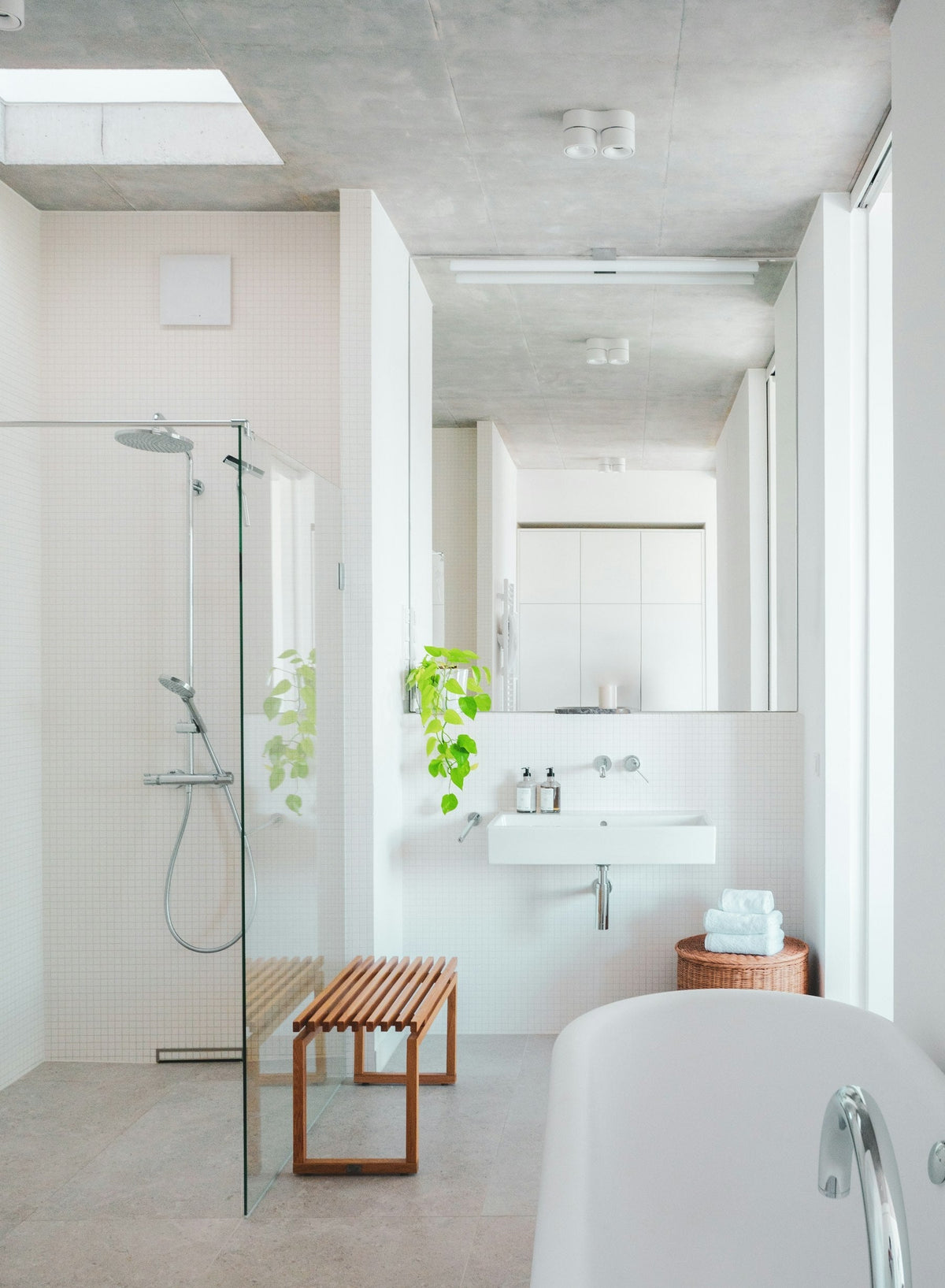
A microcement bathroom in a Glasgow tenement flat is possible, but in these buildings the floor and the tanking decide the job long before the colour does. Zavoré installs microcement with our own artisans, and in a tenement we begin by checking whether the timber floor is stiff enough, whether the old tiles are sound and how the walls behind the shower will be waterproofed.
Our microcement bathroom installation page explains how a seamless job is planned from survey to sealer, and our page on microcement in Glasgow covers the city's flats, conversions and newer blocks. This guide narrows things down to the bathroom in a sandstone tenement, where most of the questions we are asked begin.
Glasgow's sandstone tenements were built with timber floors carried on joists, and over a century those floors have usually been lifted, notched for pipes and patched more than once. A floor like that can feel solid underfoot and still flex slightly when someone steps out of the bath. Microcement is a thin, rigid coating, and a surface that bends beneath it will crack however good the material is.
So the first job in a tenement bathroom is to find out how the floor behaves. Where it springs, it is stiffened and boarded properly before any primer goes down. Where the floor cannot be made stiff enough, we would rather say so plainly and suggest keeping the seamless finish to the walls, which is where much tenement work ends up anyway.
Many tenement bathrooms have been retiled more than once, and laying over existing tile is half the appeal of a seamless surface. Tiles that are firmly bonded can often stay, once they have been degreased and keyed. Any tile that sounds hollow when tapped comes off and the area is made good. The grout lines are filled and the surface reinforced with mesh so the old grid does not shadow through the finished coats.
Walls vary from flat to flat. Some are original lime on lath, some have been overboarded, and some are a mixture of both after earlier renovations. Board joints are reinforced, corners and junctions are meshed wherever two materials meet, and the primer is chosen for the surface it has to grip. Movement joints in the structure are carried through the finish rather than buried.
The surface itself is not what keeps water out of the building. The sealer makes microcement washable and water resistant on its face, but the wall behind a shower still needs proper tanking, exactly as it would under tile. In an upper floor flat, where a leak would reach the neighbours below, that layer matters more than any decision about colour.
A good tenement wet room therefore has three layers working together, namely a stable, reinforced base, a tanking system behind the wet zones and a sealed microcement face. The sealer comes in matt, satin and gloss, and matt shows water marks more readily on a floor, so we talk that through rather than defaulting to one.
Everything comes up the common stair, so tell us which floor you are on and how far the bathroom is from the door. Protection for the close and the landing is planned in, and we keep noise and dust to sensible levels for the neighbours. If your building is listed, listed building consent is generally needed for works that affect its character, so check with your local planning authority before you commit to changes.
Cold rooms slow drying, and a tenement bathroom with a north facing window in winter can take longer between coats than a warm modern room. That is one reason we never promise a finish date before the survey.
A floor is laid wet in one go, which is why a block of days suits a bathroom. How long it takes depends on what the survey finds, so the timing is set then and not before.
High ceilings and tall sash windows give tenement bathrooms a different feel from a modern box room. Soft greys and warm stone shades keep the space calm, while a deeper tone on the floor can anchor a room with a lot of white sanitaryware. You can choose from our 48 house colours or give us an NCS reference, and a sample board lets you see it in the room before anything is laid.
If you prefer a softer, burnished wall in the shower, tadelakt is another option, and our tadelakt installation page explains how that finish is laid.
Often, yes. The tiles must be firmly bonded, degreased and keyed, with any hollow sounding ones lifted and made good. The grout lines are filled and the surface meshed so the old pattern does not shadow through. If the tiles are loose or the floor moves, they come up first.
Very possibly. Timber floors on joists can flex, and a rigid coating will crack over a moving base. We check the floor at the survey and tell you plainly if it needs stiffening and boarding, or if the seamless finish should stay on the walls.
No. The sealer makes the face washable, but tanking behind the shower does the waterproofing, just as it would under tiles. In an upper floor flat this layer protects the neighbours below as well as your own bathroom.
It depends on the floor, the walls, the tanking, access up the stair and the area involved. We give a price only after the survey, because the preparation varies so much between tenement flats.
To talk about your bathroom, ring +44 7592 929191 or email sales@zavore.co.uk with photos, rough measurements and your floor level, and we will explain how the survey would run.
How microcement can be laid over existing tiles in Dubai tower bathrooms, from tapping and keying the tiles to tanking behind the shower ...
East MidlandsFor people in Loughborough, Mansfield and nearby East Midlands towns, how our decorative plaster courses in Birmingham and Manchester com...
CareerEvery Zavoré plastering course includes first job support, a lifetime helpline and your finished sample boards, so the step from course t...
BuckinghamshireHow learners from Watford, High Wycombe and Amersham can fit a three day Venetian plastering course at our London centre around work, and...
CoursesOur microcement course runs on 1 to 1 Training for three days, covering substrates, tiles, mesh, primer, thin coats, colour, sealing and ...
Beginner CourseThe theory part of our Beginner Course in plain words, what lime plaster is, how it cures and why it behaves as it does, and how that sha...

Providing luxury finishes for the most prestigious addresses in the world
Venetian plaster, limewash, microcement, tadelakt, metallics, sculptural plaster and gold leaf, supplied and installed by our own team, with Venetian plaster taught at our Birmingham studio.
One list, run by the people who make the material. No noise, and nothing we would not want to read ourselves.
We email as the house has something worth saying, never daily. Unsubscribe from any email, or reply STOP to any text. We never pass your details to anyone.