

✦
Where Artistry Begins
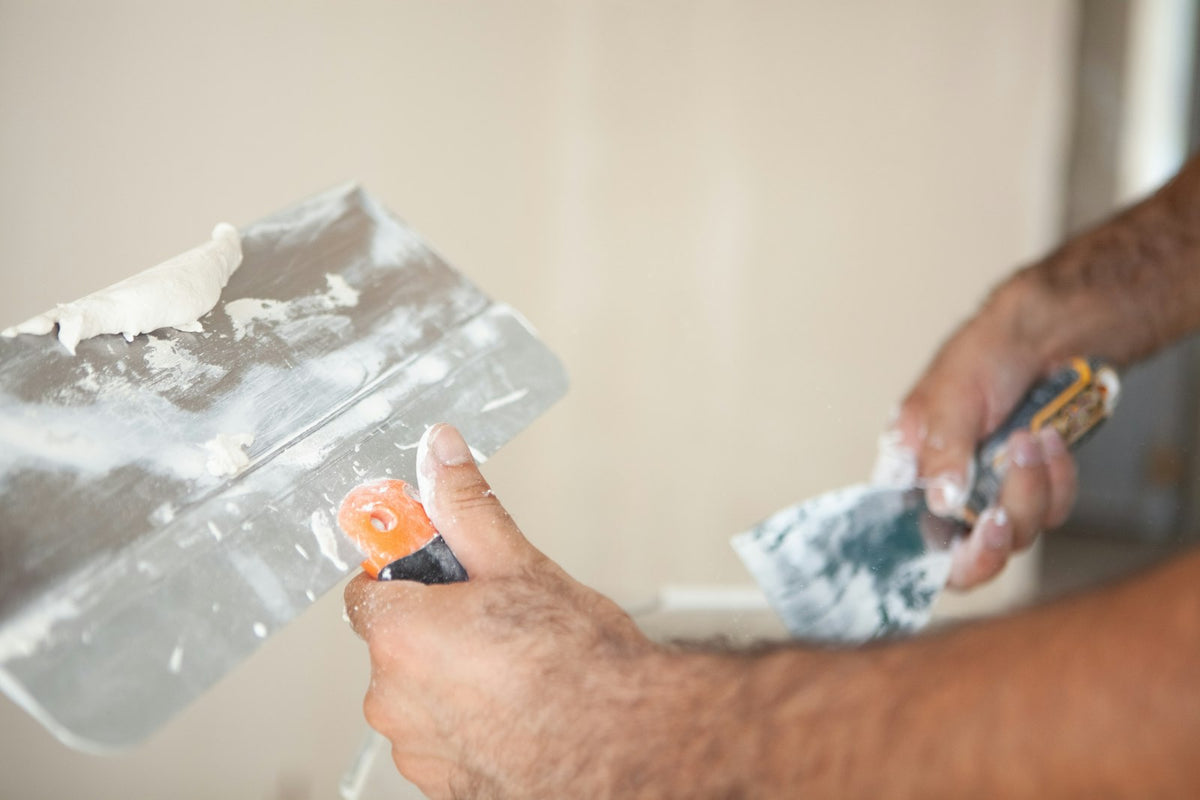
A lime plastering course is only as good as the understanding behind the trowel, which is why the Zavoré Beginner Course opens with the theory of how lime cures before anyone touches a wall. Over 3 days, 10am to 5pm, with no more than six students, you learn what lime plaster is, why it behaves the way it does, and then lay Marmorino, Polished Plaster and Metallics yourself.
Every date for the Beginner Course, and the other courses, is on our Venetian plaster training page, and you can book the Beginner Course directly. This post follows the theory session as it is taught at the Venetian plaster course in Manchester, though the same course runs at the Birmingham Academy and our London centre at the same price.
Most people arrive wanting to polish. The tutors hold that back for a reason. A Venetian finish is several thin coats of lime and marble, and each one only works if it goes on at the right moment over a coat that is ready for it. If you do not know what the material is doing, you are guessing, and guessing shows on a polished wall.
So the course begins with what lime plaster actually is, how it hardens, and why it reacts to the weather, the wall and the trowel in the way it does. It is plain talk, not a chemistry lesson, and it connects directly to what you then do at the bench.
Lime starts life as limestone. Heated and then combined with water, it becomes the slaked lime that sits at the heart of a traditional plaster. Mixed with finely ground marble, it becomes the paste in a tub of Venetian plaster. The grade of the marble changes the finish, from the fine powder used for a polished plaster to the coarser grain in a marmorino.
Because it is mineral, lime breathes. On a solid masonry wall it lets moisture pass through rather than trapping it, which is the main difference from an acrylic product that forms a film over the surface.
Lime plaster does not dry and harden in one step. After the water leaves, it slowly takes up carbon dioxide from the air and turns back toward the stone it came from. That process carries on well after the surface feels dry to the touch.
At the bench, this explains a lot. It is why a coat has to be left to firm up before the next goes on, why a wall that is too warm or too draughty can skin over too fast, why a cold, damp room slows everything down, and why the moment to burnish is a window rather than a fixed time. Students start to feel that window in their hands over the three days.
Once the ideas are in place, the course moves on to surface preparation and the base coat, then to building and controlling textures so they stay even, then to coat systems and protection. By the end of the course you are taking Marmorino, Polished Plaster and Metallics from bucket to burnish on your own boards. The Manchester centre is visited by appointment, and the course days are the same there as in Birmingham and London.
Everything you need is provided, the Italian plasters, primers, waxes, trowels and boards. You leave with your finished boards, a Zavoré certificate, which is not a formal qualification, a place in a private course group, the helpline for life and first job support. Trade pricing, ten percent off materials, is available through a trade account.
First job support helps you find, price and win a first paid decorative job once you leave. To go further, there is the Advanced Course, £1,200 for 4 days, which adds deeper theory, artificial rock, textured marmorino, stencil work, vein work by hand and polishing to a high gloss. 1 to 1 Training, £1,500 for 3 days, is the route for tadelakt, limewash or microcement, or for a job you are stuck on.
Book online for the full fee, or ring to pay half as a deposit and the balance on the first morning. We match dates with you and confirm by email within 24 hours. Private individuals have 14 days from confirmation to cancel for a full refund; see our refund policy for the rest.
None at all. The course starts with the theory of lime and builds up from preparing a surface to polishing, so complete beginners, decorators and homeowners all start from the same place.
It teaches Venetian plaster and decorative lime finishes, Marmorino, Polished Plaster and Metallics, built on a proper understanding of how lime cures. It is not a general plastering course for skimming whole houses.
Lime is caustic while wet, so it can irritate skin and eyes. With gloves, eye protection and sensible habits it is safe to handle, and safe handling is part of how the course is taught.
Questions before booking are welcome on +44 7592 929191, Monday to Saturday, 9am to 6pm, or at sales@zavore.co.uk. Tell us what you would like to learn and which centre suits you.
Why Venetian plaster stays outside the shower in a bathroom, and how UAE applicators learn tadelakt for wet walls on 1 to 1 Training in E...
StaffordshireFor Staffordshire searchers looking for plastering courses near me, an honest guide to the decorative finishes we teach at the Birmingham...
CoursesWhich polished plaster course an interior designer should book, what the Beginner Course and 1 to 1 Training cover, and what you take bac...
DubaiDubai applicators can learn microcement on 1 to 1 Training at a Zavoré centre in England, three days covering substrates, mesh, coats, se...
Buying GuideA buying guide to Beton Stucco, the concrete effect plaster for walls, covering greys, the sample board, quantities, sealer and tracked d...
CoursesHeritage lime plastering courses and a Venetian plaster course teach different crafts. Here is what each covers, what we teach and who sh...

Providing luxury finishes for the most prestigious addresses in the world
Venetian plaster, limewash, microcement, tadelakt, metallics, sculptural plaster and gold leaf, supplied and installed by our own team, with Venetian plaster taught at our Birmingham studio.
One list, run by the people who make the material. No noise, and nothing we would not want to read ourselves.
We email as the house has something worth saying, never daily. Unsubscribe from any email, or reply STOP to any text. We never pass your details to anyone.