

✦
Where Artistry Begins
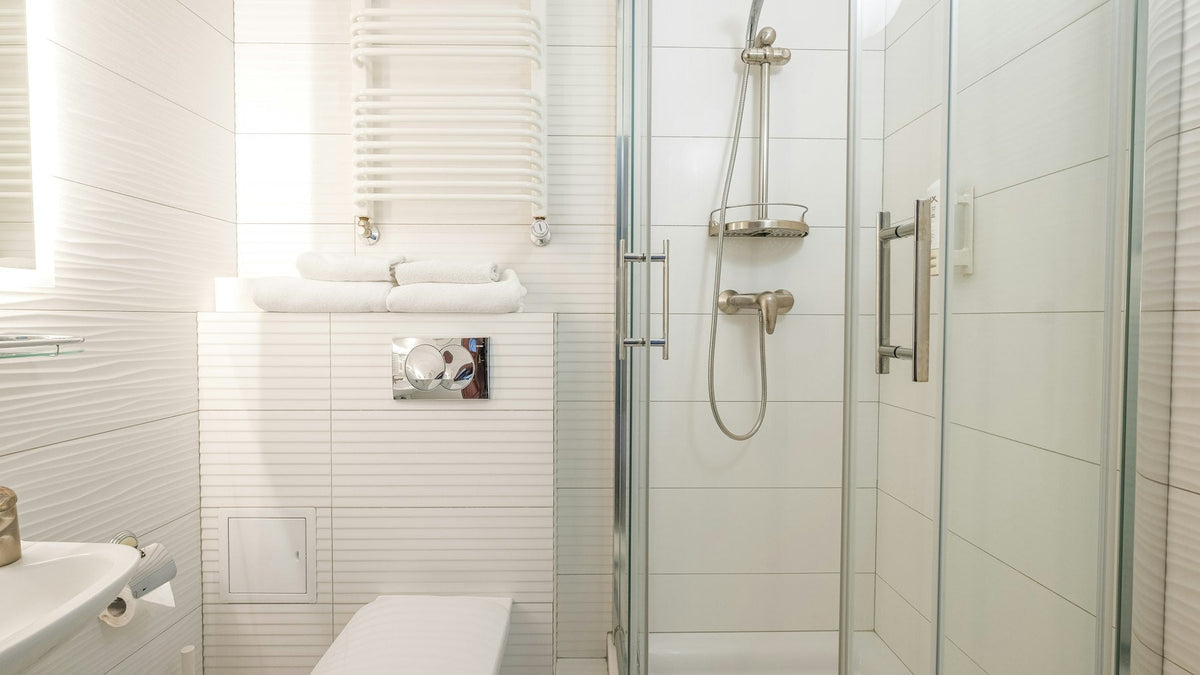
Polished plaster works in a bathroom on the dry walls, such as the wall behind a basin, a bath end away from the taps or the walls outside the shower, as long as it is waxed and the room is well ventilated. It does not belong inside a shower or anywhere water runs down the wall. Zavoré installs polished plaster in bathrooms across the UK with our own artisans, and inside the shower we install tadelakt, or microcement on a waterproofed wall, instead.
Our page on polished plaster explains the finish in full, and our Venetian plaster installation page sets out how a job runs. We install in every part of the country, and our page on Venetian plastering across the UK lists the areas. This guide is about the bathroom itself, and where each finish should stop.
Think in zones. A bathroom has wet areas, where water lands every day, and dry areas, where it only meets steam and the odd splash. Polished plaster is happy in the dry zone. The wall behind a freestanding bath, a vanity wall with a mirror, the walls around a WC and the ceiling in a well ventilated room are all good places for it. A marble effect wall behind a basin, burnished to a soft shine and waxed, can give a small bathroom real depth.
Wax protects polished plaster from splashes and makes it easier to wipe, but it does not make it waterproof. A good extractor fan and a habit of opening a window after a shower help any finish in a bathroom last.
Venetian plaster gives a marble look, but it is not marble and it is not built to stand under running water. Daily soaking, soap and scrubbing break down the wax and then the surface itself, and a shower wall needs a finish designed for the job. That is not a weakness in the plaster, simply a question of choosing the right material for each part of the room.
Moroccan tadelakt is a lime plaster polished with a stone and treated with soap so the surface becomes water resistant. It has a soft, satin look and curves easily around niches and benches. It goes on a properly waterproofed wall.
For a more contemporary look, microcement is a thin cement based coating that we install on walls and floors to give seamless walls and a seamless shower floor. Its sealer makes it washable, but the wall behind a shower still needs tanking first, as it does with tadelakt. A microcement bathroom with polished plaster on the dry walls can look calm and continuous.
Sometimes, but it is rarely the simplest route. Tiles are sealed and glossy, so they need careful preparation and a suitable primer, and grout lines can show through a polished finish. In many cases taking the tiles off and preparing the wall properly gives a better and longer lasting result. We decide at the survey.
We do not publish installation prices or timescales, because they depend on what the survey finds. Plaster materials such as polished plaster and wax are sold in our shop for decorators with the right skills.
Yes, on a freestanding bath or a bath end away from the taps and shower, waxed and in a ventilated room. If a shower is fitted over the bath, that wall becomes a wet zone, and tadelakt or microcement on a waterproofed wall is the better choice there.
No. Wax makes it more resistant to splashes and easier to wipe, but it does not make it waterproof. That is why it stays on dry walls and why the shower itself gets tadelakt or microcement.
Wipe it with a soft damp cloth and mild soap, then dry it. Avoid abrasive pads and strong cleaners, which strip the wax. A fresh coat of wax from time to time keeps it protected.
Yes, and they often look good together. Microcement can cover the shower and floor as seamless surfaces, while polished plaster gives the dry walls depth and a soft shine.
If you are planning a bathroom with polished plaster, send us the details. Call +44 7592 929191, Monday to Saturday, 9am to 6pm, or email sales@zavore.co.uk with photos, rough measurements and the address. You can also order the sample board to see colours in the room.
Leeds has many Victorian terraces and villas with solid walls and original mouldings. This guide covers lime plaster repairs and coving r...
LimewashHow brush technique, thin coats and drying create the cloudy look of limewash, and how to ask Zavoré about limewash training.
Buying GuideThe Zavoré plaster range grouped by the look and job each one does, to help you shortlist finishes before ordering samples.
BirminghamA practical checklist for students before a Zavoré Academy course. Clothes, reading, questions to bring and what is already supplied at t...
ManchesterA guide to Venetian plastering in Manchester offices, receptions and commercial spaces, from finish choice and brand colours to planning ...
LimewashAn outline of what limewash training covers about mixing limewash and the risks of slaking lime, and how to ask Zavoré about it.

Providing luxury finishes for the most prestigious addresses in the world
Venetian plaster, limewash, microcement, tadelakt, metallics, sculptural plaster and gold leaf, supplied and installed by our own team, with Venetian plaster taught at our Birmingham studio.
One list, run by the people who make the material. No noise, and nothing we would not want to read ourselves.
We email as the house has something worth saying, never daily. Unsubscribe from any email, or reply STOP to any text. We never pass your details to anyone.