

✦
Where Artistry Begins
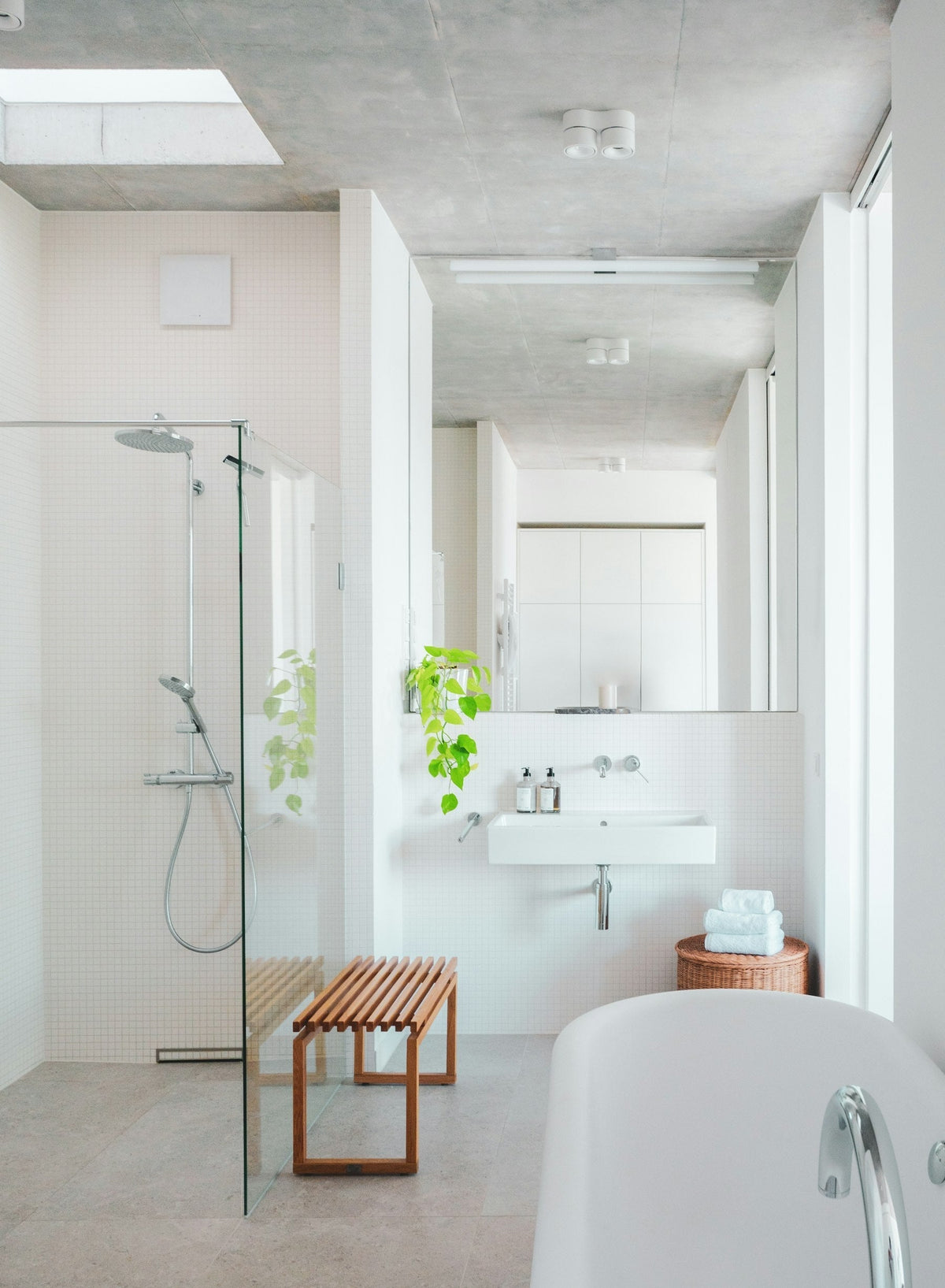
A microcement bathroom in a Nottingham home is a family bathroom or en suite where floor, walls and shower run as one hand trowelled surface with no grout lines. Zavoré installs it with our own artisans, over sound old tiles or over new boards, and in wet rooms with a tanked floor. Every job starts with photos and rough measurements, then a survey before any price.
The way our artisans prepare, lay and seal the surface is set out on the microcement installation page, and what suits the city's homes is covered on our page for microcement in Nottingham. This guide is narrower. It is about bathrooms only, and about the three kinds of house most Nottingham bathrooms sit in.
Most of them can, once the base is right. The city has long runs of Victorian and Edwardian brick terraces in districts such as Sherwood, Lenton and Sneinton, larger villas around Mapperley Park and the Park Estate, plenty of interwar and postwar semis on the edges, and a good number of newer estates and apartment buildings. Each of those brings its own bathroom.
In an older terrace the bathroom is often at the back on the first floor, or in a loft conversion, and the floor is timber. In a semi it may be a tired family bathroom with tiles from an earlier refit. In a new build it is usually a compact en suite with plasterboard walls and a screed or chipboard floor. None of these rules microcement out. They just change what has to happen before the first coat.
Many people want the old tiles covered rather than ripped out, and that is often possible. The tiles must be firmly bonded, clean and degreased, then keyed so the primer can grip. Grout lines are filled and the surface is reinforced so the joint pattern does not show through later. Any tile that sounds hollow when tapped is lifted and the patch made good. If too many are loose, or the floor beneath moves, the tiles come off and we start from a new base instead.
New boards are a cleaner start. Plasterboard and cement board joints are reinforced, corners and the edge of the shower tray get mesh, and the primer is chosen to suit the board. Where tile meets board, or wall meets floor, the junction is reinforced too, because those are the places a thin rigid surface would otherwise crack.
A floor that moves underfoot will crack microcement however well it is laid. Upstairs in a terrace, or in a loft en suite, the joists and boards are checked at the survey, and a springy floor is stiffened and overboarded first. That is ordinary building work, and we say plainly if it is needed.
In newer homes the floor is more often a screed. It has to be dry right through, not just on the surface, before anything goes on. For a level access wet room, the falls to the drain are built into the base so water runs away, and the finish follows them. Movement joints in the structure are carried through the surface rather than hidden.
The surface is washable once sealed, and that is what makes it easy to keep clean. The waterproofing is a separate layer. Behind the shower, and across a wet room floor, the structure is tanked exactly as it would be under tile, and the finish goes over that. Microcement is a surface, not a replacement for tanking, and anyone who tells you otherwise is skipping a step.
Ventilation matters as well. A bathroom that runs wet for hours after every shower is hard on any finish, so a working extractor fan is worth checking before work begins.
How long it takes depends on the room, the base and the drying between coats, so we set that at the survey rather than guess. A bathroom is out of use while the work is under way, which is worth planning around in a house with only one.
Use a mild, pH neutral cleaner and a soft cloth. Avoid scouring pads, bleach and strong limescale removers, which can wear the sealer. A matt sheen hides water marks better on a floor, while a satin or gloss sheen on walls makes wiping down easy. If the sealer wears in a busy spot after years of use, it can be renewed.
Often, yes. The tiles need to be firmly stuck, degreased and keyed, with the grout lines filled and the surface reinforced. Hollow tiles are lifted and made good first. If the tiles are loose in many places, or the floor flexes, they come up instead, and the survey tells us which.
Usually the floor. Timber loft floors can flex, and a flexing floor will crack a rigid coating, so it is stiffened and boarded before work starts. The shower area is tanked as normal. We look at the build up on the survey and tell you honestly if it is not suitable.
Yes. Niches, benches, reveals and bath panels can all be finished in the same surface, which is a large part of the appeal. Each one needs a rigid, well fixed base and reinforced corners, so we plan them into the survey rather than add them on the day.
Send photos and rough measurements first. A price follows the survey, because the base under the finish changes the work far more than the size of the room does.
Tell us about your bathroom. Call +44 7592 929191, Monday to Saturday from 9am to 6pm, or email sales@zavore.co.uk with photos, rough measurements, what is under the tiles if you know, and your postcode.
How a microcement bathroom is planned in a Manchester city centre or Salford apartment, from building access and occupied flats to one se...
DubaiWhy a Dubai villa renovation contractor might train one lead hand in Venetian plaster in England, and which course suits older walls, coa...
SharjahHow Sharjah applicators learn marmorino in England, from the Beginner Course to textured marmorino on the Advanced Course, and what each ...
BookingHow booking a course in plastering with Zavoré works, from paying in full or half by phone to matched dates, email confirmation, refunds ...
Abu DhabiApplicators who lay Venetian plaster paint for UAE clients and now get asked for the real thing can learn lime plaster in person at our c...
CommercialHow a Dubai fit out company can send a group of applicators to England for in person Venetian plaster training, from seats and dates to w...

Providing luxury finishes for the most prestigious addresses in the world
Venetian plaster, limewash, microcement, tadelakt, metallics, sculptural plaster and gold leaf, supplied and installed by our own team, with Venetian plaster taught at our Birmingham studio.
One list, run by the people who make the material. No noise, and nothing we would not want to read ourselves.
We email as the house has something worth saying, never daily. Unsubscribe from any email, or reply STOP to any text. We never pass your details to anyone.